

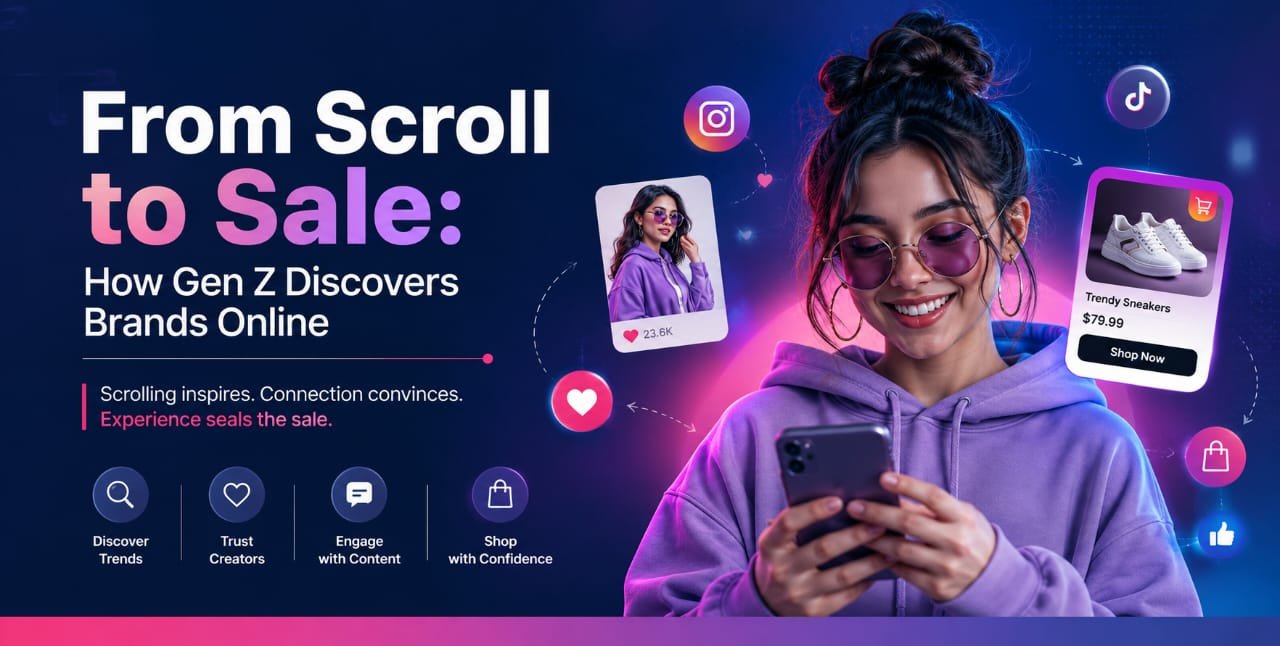
A traditional ad is a rare way for Gen Z to discover a brand. It can start with a 15 second Instagram Reel, a TikTok video, a creator suggestion, a Google search, a Reddit thread or even an AI-generated answer. “One scroll can introduce a product, spark curiosity and ultimately influence a purchasing decision. That’s why firms have to go beyond just internet exposure in 2026. The goal is to be found, understood, believed and remembered in the digital locations where Gen Z spends their time. Discovery has shifted from social media to AI-powered search in the customer journey. Brands that know the way can turn casual scrolling into meaningful engagement—and income.
Who is Gen Z?
“Gen Z” often includes those born in the late 1990s to early 2010s. They’ve grown up in a world where the smartphone, social media, streaming platforms, online communities and fast-paced digital technology are everywhere. For this audience the internet is not only a source of information, but also… This is where customers discover trends, browse things, check out brands, ask for recommendations and form opinions. But Gen Z isn’t simply there for the loudest brand yells. They are more likely to pay attention to companies that are authentic, useful, funny, transparent and culturally relevant. Scrolling is where the Gen Z customer journey begins. This is what the typical customer journeys used to look like: Awareness > Consideration > Buy Today, the Gen Z path can feel a lot less predictable: Scroll → Look → Search → Explore → Compare → Read Reviews → Follow → Interact → Buy Sometimes the whole process takes just a few hours. Sometimes a person will see a brand today, stalk it for weeks and only buy when the proper necessity or offer comes up. Which implies firms need to create various opportunities for discovery and not one advertisement, not one platform.1. Social Media is the New Search Tool
Social media is not merely a method for Gen Z to connect with friends. It’s also a powerful discovery platform. Social sites like Instagram, TikTok and YouTube can expose you to brands you didn’t even seek for. A user might see:- Fast product demo
- Before and after the change
- Behind the scenes shots
- Customer Review
- A Creator Suggestion
- A story that strikes a chord with people
- Instructional reel
- A hot piece of content
2. Summary Video Can Convert Attention Into Interest
Gen Z has become accustomed to digesting information at a fast pace. Short-form videos are effective because they can convey an idea in a matter of seconds, while blending graphics, storytelling, personality and information. But it’s not enough to merely create short films. Keep scrolling until you find a cause to quit. “A great video could: Hook: Start with a problem, query, shocking revelation or relevant situation. Value : Give the audience something useful, amusing or interesting. Brand connection: Seamlessly embed the product, service or solution. CTA: Provide the audience with an easy next step. Instead of: “Buy our service today.” A brand might generate content around: “3 mistakes businesses make when trying to grow on Instagram.” The second technique gives the viewer a cause to watch before the brand is introduced.3. Authenticity Matters More Than Perfect Content
One of the biggest mistakes marketers can make when targeting younger consumers is making every piece of content look like a typical commercial. Over-polished information might often come off as remote or unnatural. Gen Z tends to respond better to more human stuff. This might mean:- Meet the faces behind the business
- Sharing actual customer experiences
- Frequently asked questions
- Demonstrating real-life use of a product
- Sharing behind the scenes moments
- What do you say about that?
- Owning up to mistakes or problems
- Developing content that seems native to the platform
4. Gen Z Search
But Google Search behaviour is changing, too. Google is still vital, but increasingly, younger people are discovering information via social media, video platforms, online forums, maps, marketplaces, and AI-powered tools. Someone searching for a cafe might go on Instagram. A potential customer might read YouTube reviews of a product. An opinion seeker might look at Reddit. Someone considering possibilities can use TikTok. An AI-powered search experience may appeal to someone looking for a rapid answer. For businesses this means that SEO should no longer be seen as just ranking a website on Google alone. The greater aim is search exposure across the digital ecosystem.5. Social SEO Is Increasingly Important
Discovery can be further supported with social media material. Users can search platforms using terms such as “best skincare routine” “local digital marketing agency” “top coffee shops in Kochi” “choosing running shoes” Businesses should consider the terms that consumers really use when writing captions, video titles, on-screen text, descriptions and other information. Instead of flooding content with keywords, marketers should organically address issues their audience is already asking. The formula is easy: Search the knowledge base ← Develop helpful content ← Use proper language Make the answer easy to swallow.6. Creators Drive Purchase Decisions
Influencer marketing is a far cry from celebrities hawking things. Niche creators and micro-creators might be particularly useful because their audiences could perceive them as more relatable and trustworthy. You don’t have to have millions of followers to impact buying behaviour as a creator. “Sometimes, a smaller creator with a highly engaged audience that matches a brand’s target customer can create a lot more relevance than a huge but unrelated account. The key isn’t just, “How many followers does this creator have? The questions that are better are:- Does the audience resemble our target customers?
- Is the creator really engaging?
- Is their content aligned with our brand?
- Do they talk about our product organically?
- But do their followers trust the advice?
7. Social Proof and Testimonials
Interest may Make or Break the Decision Discovery Trust results in action. Many buyers want to see proof that a brand can provide what it claims, before they buy. That proof might be:- Testimonials
- Customer Reviews
- User-Created Content
- Ratings
- Comments
- Case studies
- Creator recommendations
- Customer photographs & videos
8. Gen Z Craves Personality in Brands
Not every trend is a must for brands to engage with Gen Z. But it needs a personality. A brand that sounds exactly like every other competition is easy to overlook. Strong brands use a consistent voice throughout their material. Maybe: Playful. “Bold. Useful. Very little. That’s funny. Nice. Professional but friendly. The main thing is to be consistent. Brand recognition is when your customers can identify your brand without even looking at the logo.9. AI is Introducing a New Level to Brand Discovery
AI is transforming the way humans access and analyse information. Increasingly, rather than opening several websites manually, users can ask AI tools questions and get a summary of recommendations, explanations, comparisons or points of departure. This gives businesses another consideration: Is your brand information clear, relevant, trustworthy and easy for digital systems to interpret? Companies should continue to invest in strong websites, interesting content, well-structured information, local visibility, customer reviews, and authoritative online presence. SEO is changing, but the foundations are always the same: help consumers discover trustworthy answers and make informed decisions.10. The best content doesn’t always lead to direct sales.
One of the biggest mistakes brands make in social media is trying to sell in every post. Gen Z doesn’t always want a sales pitch with every scroll. A greater content strategy can balance diverse aims. Educational Content Teach the audience something they can use. Entertaining Content Give them a cause to stop, watch and share . Relatable Content Discuss scenarios that your audience can relate to. Inspirational Content Show potential, changes or success stories. Promotional Content Tell us about your products, services, deals or solutions. A good content strategy provides audiences with reasons to follow a company before asking them to buy from it.From Views to Value: Views are interesting. What Businesses Need to Focus On
Likes are nice. Followers seem good. But in the end, corporations want results. The fundamental question is: What happens if someone discovers your brand? A successful digital journey may look like: Short form video → Profile visit → Website visit → Consumption of content → Trust → Inquiry → Purchase This means businesses should integrate their social media strategy with their website, SEO, landing pages, reviews, lead generation and conversion strategy. “Social media shouldn’t be in a vacuum. It should be part of a wider digital ecosystem.How brands can create a Gen Z-friendly digital strategy
Here are a few key concepts that help get businesses on the road to attracting Gen Z:1. Build for the platform
Don’t just copy the same post everywhere. Understand how each platform is consumed and change the format accordingly.2. Start With Value:
Give a cause to watch, read it, save it, share it or follow it.3. Make Content Feel Human
Show personality rather than making every post sound like a corporate brochure.4. Develop Search Visibility
Optimise your website and social material for the queries and topics your audience is actually searching for.5. Leverage Social Proof
Your approach should include reviews, testimonials, case studies, and content created by users.6. Simplify the Purchase Path
Once someone is interested, don’t make them figure out what to do next. Make your website, contact information, service pages and calls-to-action simple and easy to navigate.7. Follow More Than Track
Track meaningful metrics, such as:- Quality Leads for Internet Traffic
- Engagement Content: conversion rates
- Search Saves & Shares
- Engine Visibility
- Getting new customers
- Revenue generated
